01. Market Basics
Equities, bond yields, inflation dynamics, and resilient asset allocation frameworks.
- S&P 500 & Index Funds
- Bonds & Yield Curve signals
- Purchasing power protection
Equities, bond yields, inflation dynamics, and resilient asset allocation frameworks.
How the Federal Reserve, APR, APY, and compounding intervals shape borrowing costs and returns.
Mortgages, loan amortization schedules, debt refinancing, and payoff strategies.
Interactive web calculators, visual explainers, and term glossaries.

Simple vs compound math with real-world examples revealing how savings and loan costs diverge over time.

Why interest rates change, how central bank decisions filter through the economy, and what borrowers should watch.
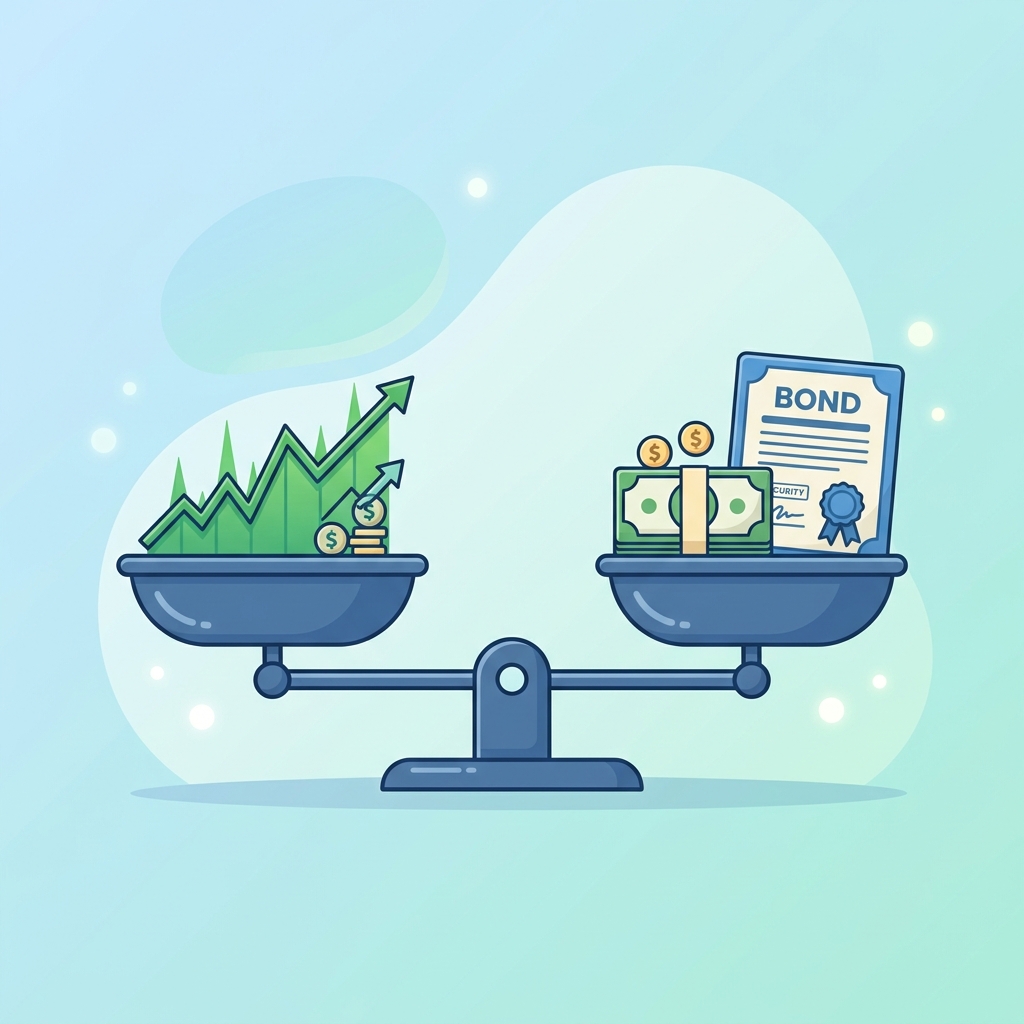
A high-level asset allocation framework for building a resilient portfolio across market cycles.

How inflation erodes purchasing power and why nominal returns can be misleading without adjustment.

How lenders calculate borrowing fees versus how banks quote savings returns under compounding rules.

Understand where every monthly payment goes and how early extra principal payments reduce overall interest.
The total annual cost of borrowing money, including interest and lender fees, expressed as a single percentage.
The total effective annual return earned on an investment or savings account, accounting for compound interest.
The schedule of periodic loan payments showing how principal and interest balances decrease over time.
A chart plotting interest rates of bonds having equal credit quality but differing maturity dates.